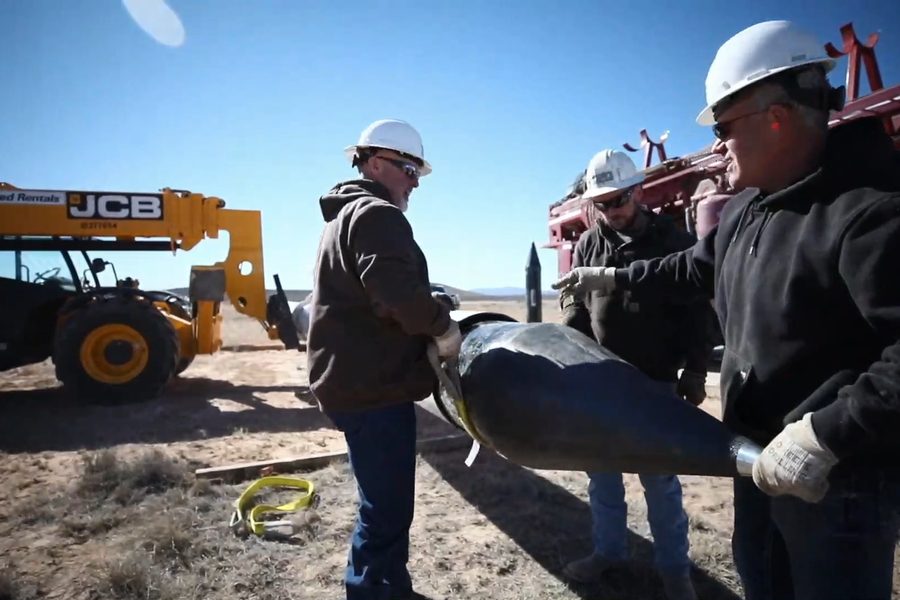
Space Dart separating from its sabot in free flight.
Test Services
Real high-G. Real flight. Real data.
We operate rocketless supersonic and hypersonic launchers that put your hardware through real launch loads, thermals, and real free flight, then return your hardware, the data, or both, depending on the mission profile.
Load, launch, repeat is our operating model.
You can test across a range of flight profiles, including horizontal high-speed and hypersonic flight from Mach 2.5+ to Mach 5+, vertical launches to defined flight-test altitudes or custom apogees, inclined free-flight range testing, and suborbital flight beginning in 2027.
Traditional high-speed and hypersonic flight programs are constrained by limited flight opportunities and long test cycles. We are built around a different model: multiple test events per day for a single program. A concentrated campaign can put repeated flight events on your hardware in days rather than waiting months between traditional test opportunities.
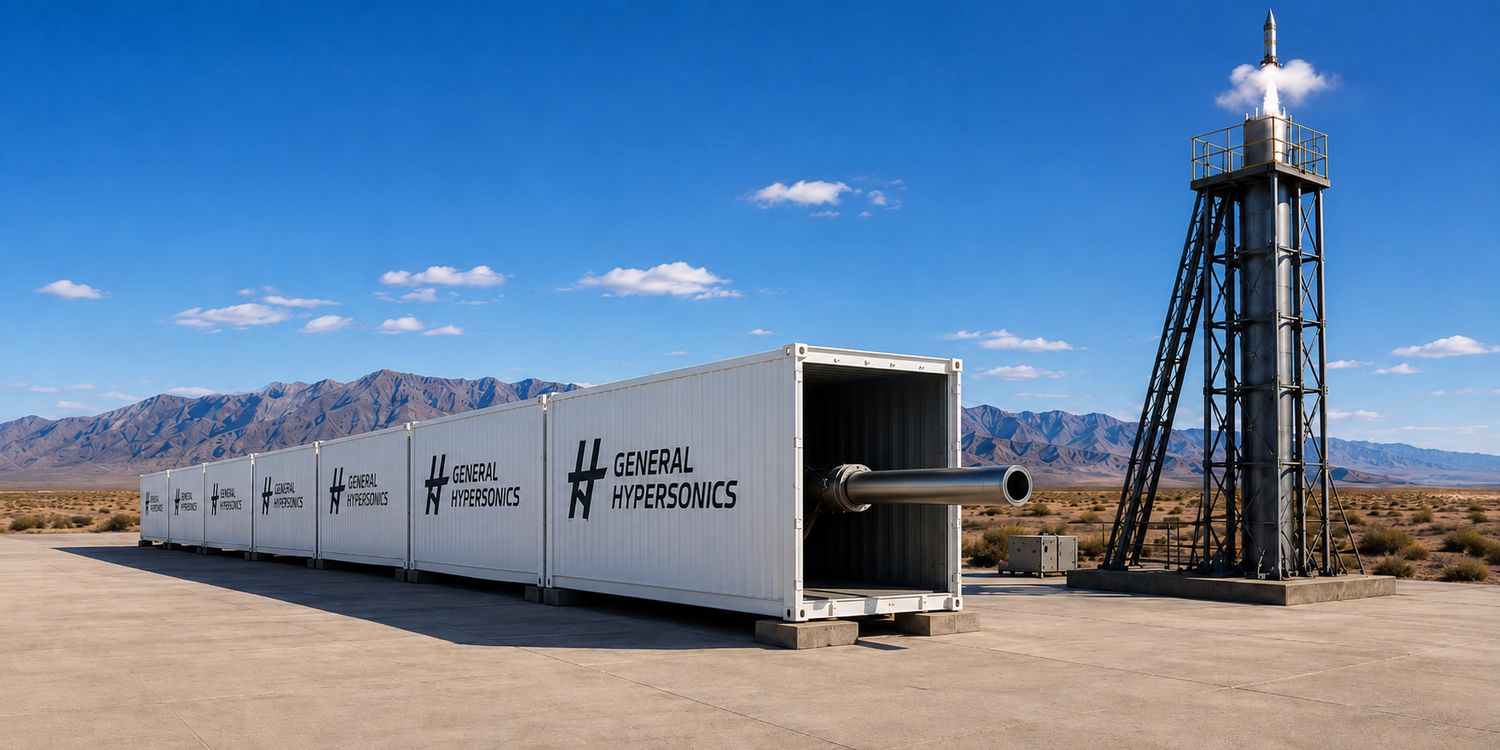
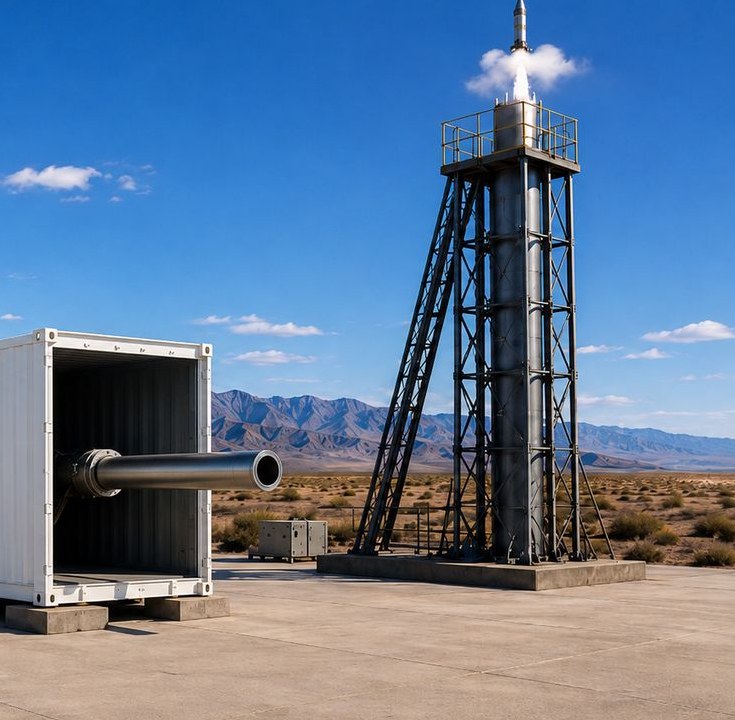
Containerized launch system and vertical configuration.
Systems
Three systems, one architecture.
Every system is built on the same HyperCore ground-launch architecture. Depending on your mission, an instrumented sabot carries and accelerates your test article through the launch tube into free flight, or your projectile or flight vehicle can be launched directly without a sabot.
Our high-cadence architecture scales across payload sizes and flight profiles, from small-component testing to payloads up to 50 kg, and from Mach 2.5+ to Mach 5+ and suborbital flight.
HyperLab 50 mm
Horizontal High-Speed & Hypersonic Flight Testing | Operating Now
High-cadence horizontal free-flight testing from Mach 2.5+ to Mach 5+, with velocity and test conditions tailored to your mission.
HyperLab is designed for small test articles including material coupons, coatings, thermal-protection materials, sensors, microelectronics, batteries, circuit components, embedded instrumentation, and other compact hardware approximately the size of two AA batteries stacked end-to-end or smaller, depending on configuration. Materials and coatings can also be integrated onto exposed test surfaces for evaluation in high-speed free flight. Fly your material printed to our projectile size, or wrap a projectile in your coating.
Use HyperLab to evaluate high-G survivability, structural response, electronics performance, sensors and instrumentation, materials, coatings, and other component-level technologies in real flight conditions.
HyperLab is our research and development backbone, derived from a technology base demonstrated through thousands of experimental and field events.
Vertical & Inclined Flight Testing | Available December 2026
HyperCore 250 provides full-scale payload, projectile, and flight-vehicle testing in ground-launched free-flight environments.
Configure your mission for vertical or inclined launch and define your payload, velocity, acceleration environment, altitude, apogee, trajectory, downrange requirements, instrumentation, and test cadence.
Test applications can include inert projectiles, flight articles and flight vehicles, avionics and electronics, sensors, guidance and navigation systems, structures and mechanical systems, materials and thermal technologies, high-G survivability testing, and flight-relevant subsystem testing.
Campaigns can range from a single developmental flight to multiple launches per day or extended test campaigns.
RigLaunch extends the HyperCore architecture to vertical suborbital flight, providing a high-cadence ground-launch platform for space, defense, science, research, university, and advanced-technology missions.
The launch system provides a longer acceleration runway within the tube, enabling high exit velocity while allowing the acceleration profile and peak G-loads to be tailored to your payload and mission.
Depending on your flight article, RigLaunch can support an instrumented sabot-carried payload or direct launch of a compatible flight vehicle.
Potential missions include space and suborbital technology demonstrations, scientific and atmospheric research, university and laboratory experiments, sensors and remote-sensing payloads, avionics and electronics, guidance and navigation systems, materials and thermal-protection testing, defense and advanced-technology payloads, and experimental flight articles and vehicles.
Define your flight environment and mission objectives. Fly the hardware. Collect real flight data. Recover hardware where the mission profile allows. Evaluate, iterate, and fly again.
Name your payload size—up to 50 kg. On-demand testing.
Free flight or captive catch. Start here, then send your requirements through the form.
01
HyperLab 50 mm
High-speed and hypersonic testing · horizontal · Mach 2.5+ to Mach 5+ Small test payloads, rapid-turn testing, multiple flights per day, and same-day quick-look data.
Available now
02
HyperCore 250 · vertical
Vertical launch and free-flight testing · 80 mm to 220 mm payloads up to 50 kg · custom altitude and apogee profiles Configure launch velocity, acceleration environment, altitude, instrumentation, and test cadence to the mission.
Dec 2026
03
HyperCore 250 · inclined
Inclined and downrange free-flight testing · 80 mm to 220 mm payloads up to 50 kg · up to approximately 150 km downrange, depending on mission and payload Designed for projectiles, flight articles, and other systems requiring realistic launch loads and extended free-flight profiles.
Dec 2026
04
RigLaunch · suborbital
Suborbital launch and flight testing · vertical · custom mission profiles to and beyond the Kármán Line Designed for space, defense, science, research, university, and advanced-technology payloads.
Q1 2027 · taking reservations
Cadence
Real flight. Multiple tests per day.
Cadence is one of our primary differentiators. Traditional flight-test assets can be constrained by vehicle availability, range access, and long reset cycles. We are designed for repeatable, high-cadence flight testing, including multiple test events per day for a single program.
Our launcher stays on the ground and is reused, allowing us to reset, reload, and fly again.
Not a simulation. Real flight. Real environment.
We are not a simulation of a launch. We are the launch.
Your hardware experiences real launch loads, separation, and free flight in sequence. Depending on the mission, we can recover your hardware, review the data, make changes, and fly again.
At HyperLab, your article can experience:
In-tube pressure and thermal environment
Peak setback acceleration
Lateral and balloting loads
Launch thermal environment
Separation
Aerothermal exposure in genuine high-speed free flight
When the mission profile permits, we recover your hardware and determine whether it survived, maintained its form, and still functions. Because we can repeat test events multiple times per day, you can accumulate flight data, iterate, and test again within a concentrated campaign.
Real data
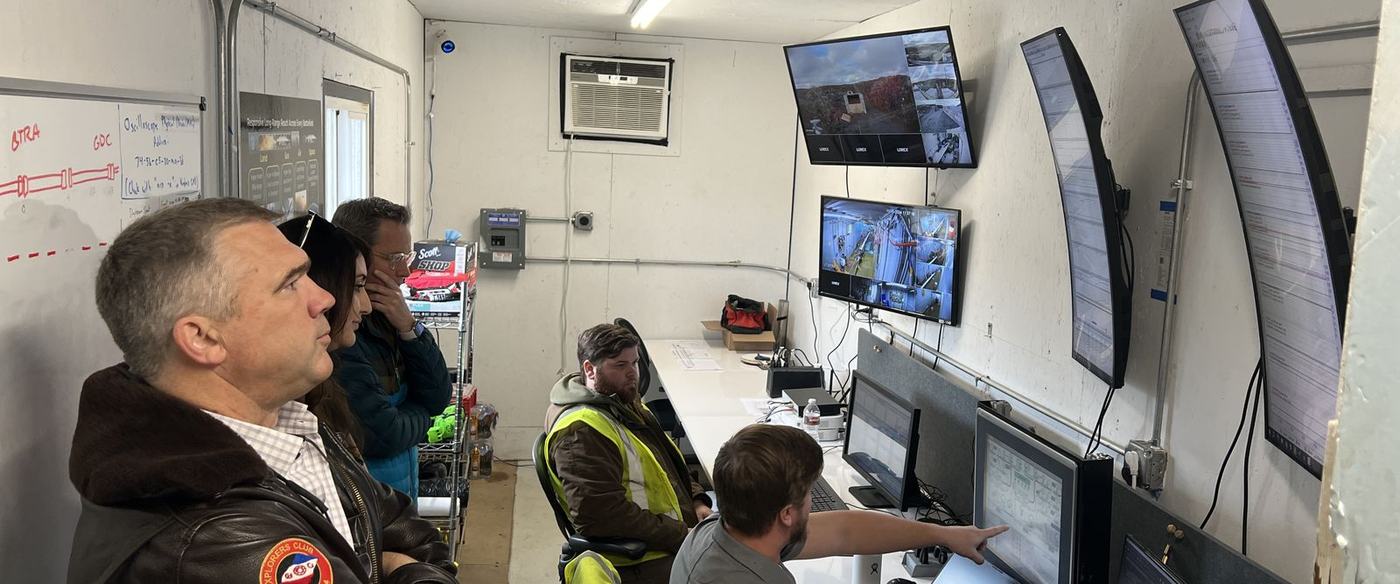
Shot control. Live feeds, instrumentation, and quick-look data in the room.
Request a test
Tell us what you are flying.
Send your test request. Expect us to contact you soon to discuss your testing needs and get your test campaign scheduled.